
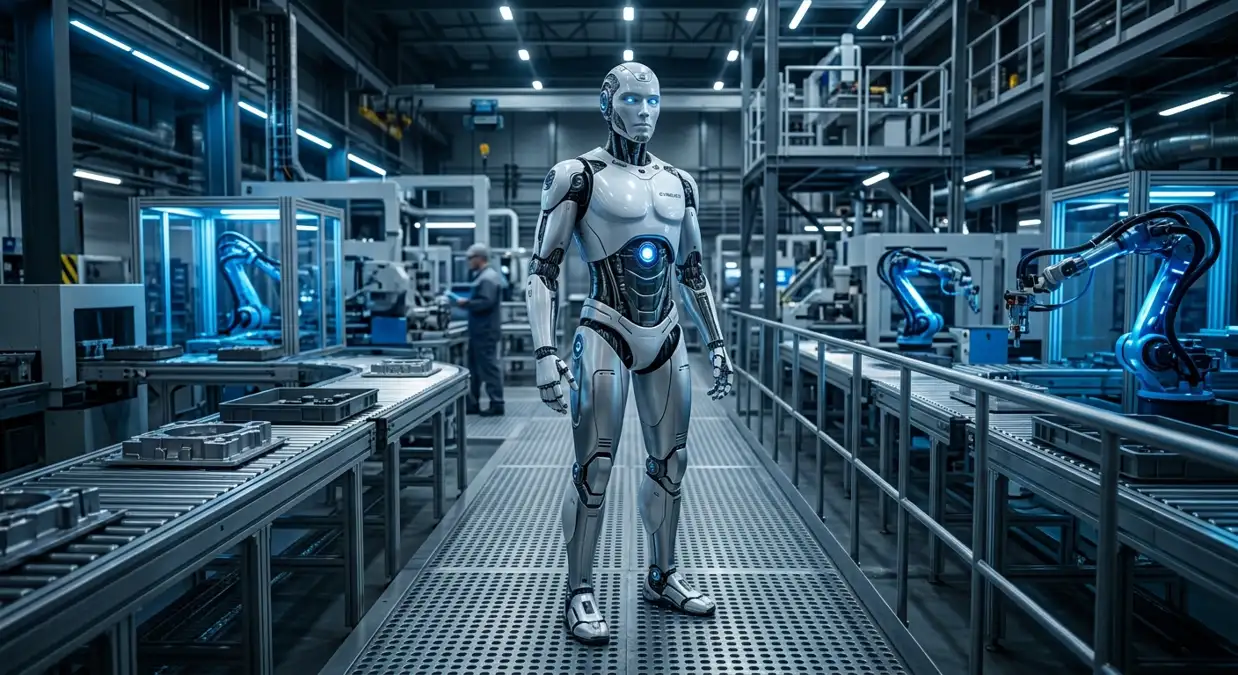
Three months ago, I thought humanoid robots were still a “five years away” story. Then I started paying close attention and realized the gap between what’s being reported and what’s actually happening on factory floors, in American homes, and in boardrooms around the world is enormous. Some developments are moving faster than expected. Others are still stuck in demo mode despite billion-dollar announcements.
This piece cuts through both the hype and the pessimism. If you want the real humanoid robot news in 2026, the live deployments, the serious funding, the overlooked problems, and the global competition shaping this space, keep reading.
The Moment That Changed Everything This Week
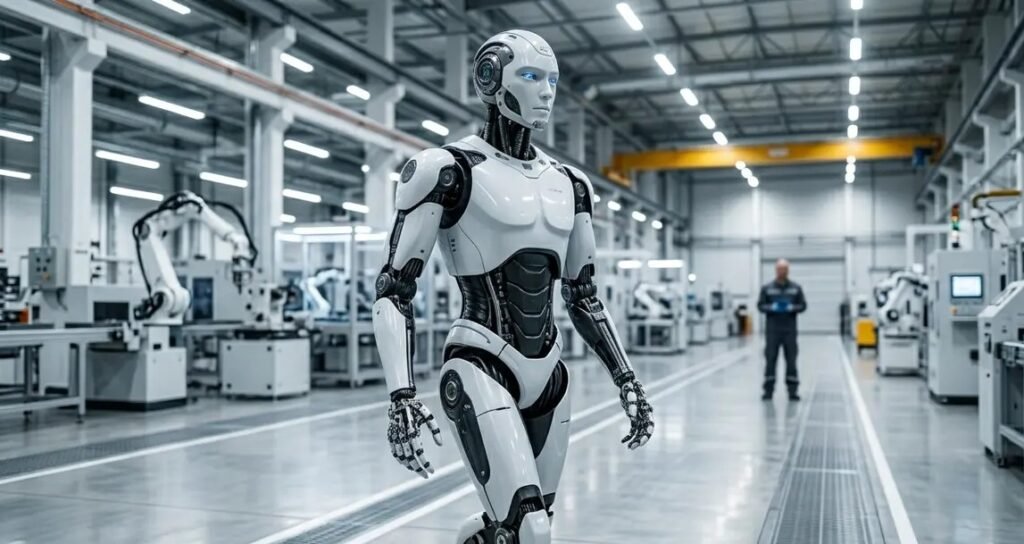
On March 31, 2026, Elon Musk quietly posted on X: “Optimus 3 is walking around, but needs some finishing touches before it’s ready to be shown.”
That one sentence buried a massive story. Tesla had promised the world a Q1 2026 reveal of its Gen 3 humanoid. The deadline came and went. What most headlines called a “delay” was actually something more interesting confirmation that the robot exists, walks, and is simply being refined before its public debut. Tesla’s entire Fremont factory Model S and Model X lines are being shut down and converted into an Optimus production facility targeting 1 million units annually.
What makes Gen 3 technically different from anything before it? The hands alone tell the story. Fifty actuators, 22 degrees of freedom, tendon-driven design modeled on human biomechanics. Tesla Board Chair Robyn Denholm described the tactile response as “very good” during late 2025 demonstrations. For context, Gen 2 had 11 degrees of freedom. This is not a small upgrade — it’s a fundamentally different machine.
The AI brain running it is also worth noting. Tesla integrated Grok — xAI’s large language model — as the voice and reasoning layer for Optimus. The same AI now rolling out to Tesla vehicles in Europe is the cognitive engine behind this robot. That cross-platform AI infrastructure is something no competitor currently has at the same scale.
This is humanoid robot news in 2026: not a clean narrative, but a messy, high-stakes race with real winners, real stumbles, and a lot of unanswered questions.
What’s Actually Deployed Right Now (April 2026)
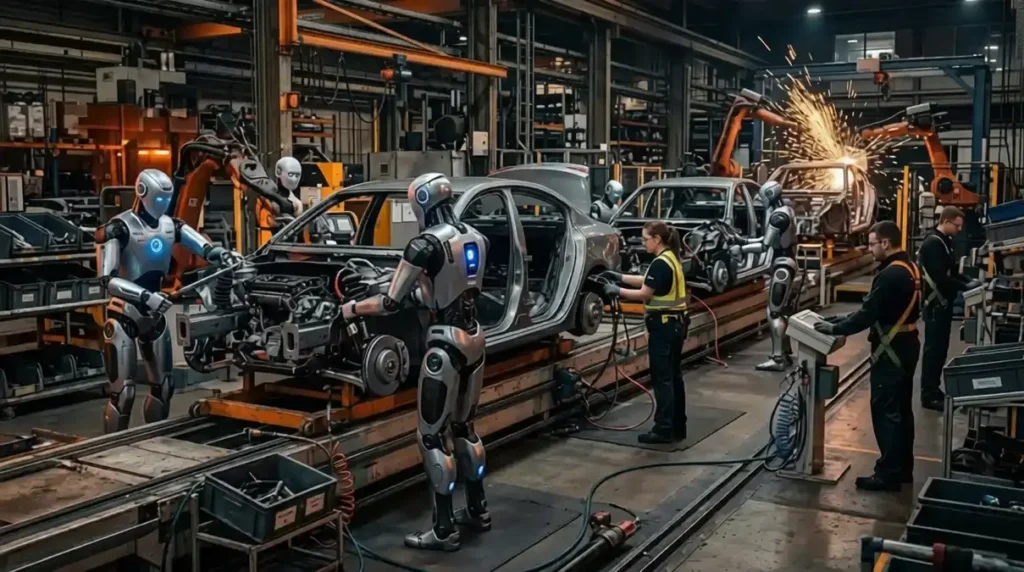
Before funding rounds and vaporware announcements, here’s what matters: robots actually doing real work.
Tesla Optimus
Roughly 1,000+ Gen 3 units are inside Fremont and Giga Texas right now. But here’s what media glosses over: as of January 2026 earnings, Musk himself admitted the robots are “primarily for learning and data collection, not productive tasks.” That honesty matters. Real autonomous factory deployment begins Q2–Q3 2026. The full Gen 3 body reveal is coming this summer, with the Tesla Annual Shareholder Meeting expected to be the stage.
Figure AI
Running full shifts inside their California headquarters. CEO Brett Adcock made headlines in March 2026 when he joined First Lady Melania Trump at the White House to introduce Figure 03 a moment that signaled American humanoid robotics reaching genuine political visibility. Adcock’s “robots building robots” target for Q4 2026 is bold, but Figure has earned some credibility here.
AGIBOT (China)
Shanghai-based AGIBOT hit its 10,000-unit production milestone in late March 2026, reporting a fourfold acceleration in manufacturing speed. That’s the real number out of China: 10,000 units, at least according to current reported figures.. Not the inflated figures circulating elsewhere.
Boston Dynamics Atlas
Production-ready electric Atlas was formally introduced at CES 2026 with a Google DeepMind partnership for reasoning through complex instructions. First commercial units are headed to Hyundai’s Metaplant in Georgia the clearest sign yet that Atlas has crossed from research platform to industrial workforce tool.
Apptronik Apollo
Backed by Google and teamed with manufacturer Jabil for scaled production, Apollo is moving into real logistics and warehousing environments this year. Its hot-swappable battery system addresses one of the industry’s most stubborn operational problems.
Realbotix
A smaller name but a real one: Realbotix announced in April 2026 it’s delivering 19 units to customers across March, April, and May. Their robots run up to 10 hours on battery genuinely exceptional in a market where 4–6 hours is standard and are customizable in appearance and voice for enterprise and consumer settings.
The Story Almost Nobody Is Telling: The Gig Economy Training Boom
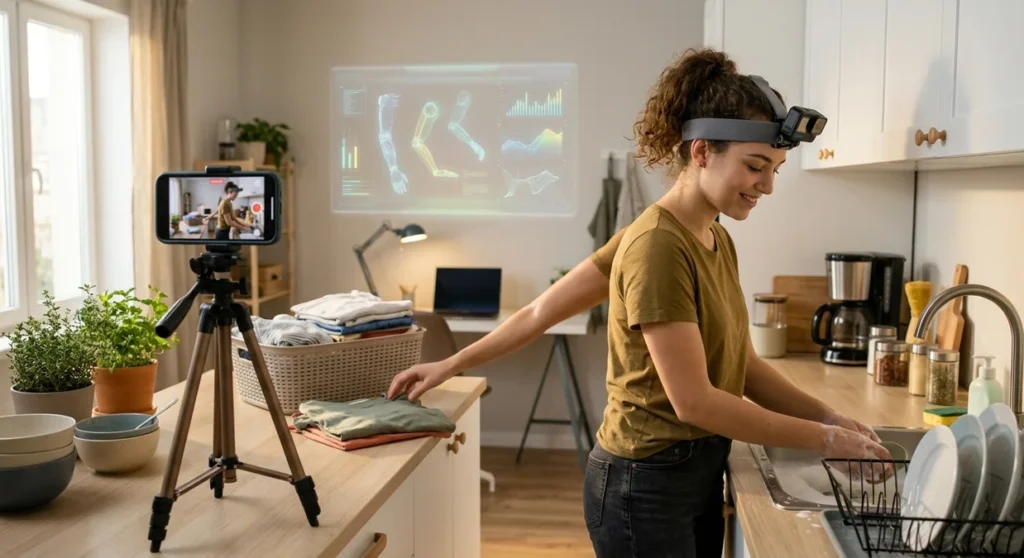
Here is a humanoid robotics angle that deserves far more attention than it gets — and it connects directly to how these robots actually learn to function in your home.
Right now, thousands of ordinary people around the world are mounting iPhones on their heads and filming themselves folding laundry, washing dishes, and picking up eggs and getting paid for it. Companies like Micro1, Scale AI, and Encord are collectively spending over $100 million a year buying these recordings to train humanoid robots. DoorDash pays its own delivery drivers to film themselves doing household chores. In China, state-owned robot training centers have workers wearing VR headsets and exoskeletons to teach robots basic kitchen tasks.
This is the unglamorous engine powering the humanoid revolution. The robots folding clothes smoothly in demo videos? They learned from someone in Nigeria or Argentina earning $15 an hour recording themselves iron shirts for hours every day. MIT Technology Review named humanoid robots a 2026 Breakthrough Technology partly because of this new data economy and readers voted it the 11th most significant breakthrough of the year.
The privacy questions this raises are real and largely unresolved. These workers are recording their homes, their routines, their families’ living spaces. The consent frameworks are thin. The data persists indefinitely. This story will get significantly bigger as home deployments accelerate.
Europe Enters the Race and It’s More Serious Than You Think
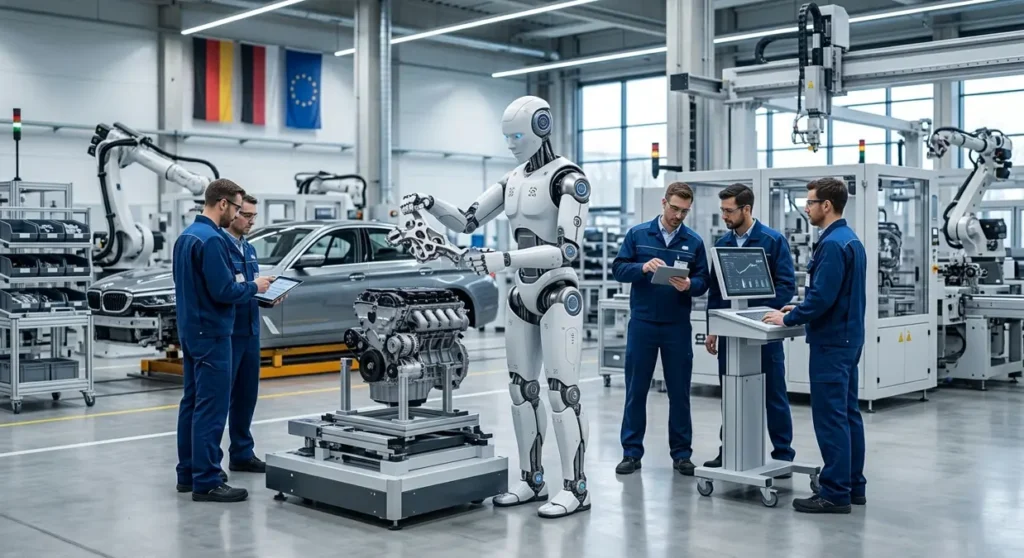
American tech media largely ignored what happened in Europe this week. Germany’s Neura Robotics just closed a €1 billion funding round with Amazon and Qualcomm as investors, valuing the startup at €4 billion the largest European robotics raise in history. Meanwhile, Sweden’s Hexagon AB has ahumanoid robot news, the Aeon, actively being tested inside BMW’s Leipzig plant right now.
Europe was late to AI and is trailing badly on EVs. But in humanoid robotics, it is genuinely competitive. The combination of Neura Robotics’ engineering depth with Amazon’s global logistics network and Qualcomm’s chip infrastructure is not something to dismiss lightly. Amazon doesn’t write billion-euro checks into companies it doesn’t intend to deploy.
For American companies, this opens a second front in a competition they were already entirely focused on China for. The competitive map just got more complicated.
The China-US Battle: Volume vs. Brains
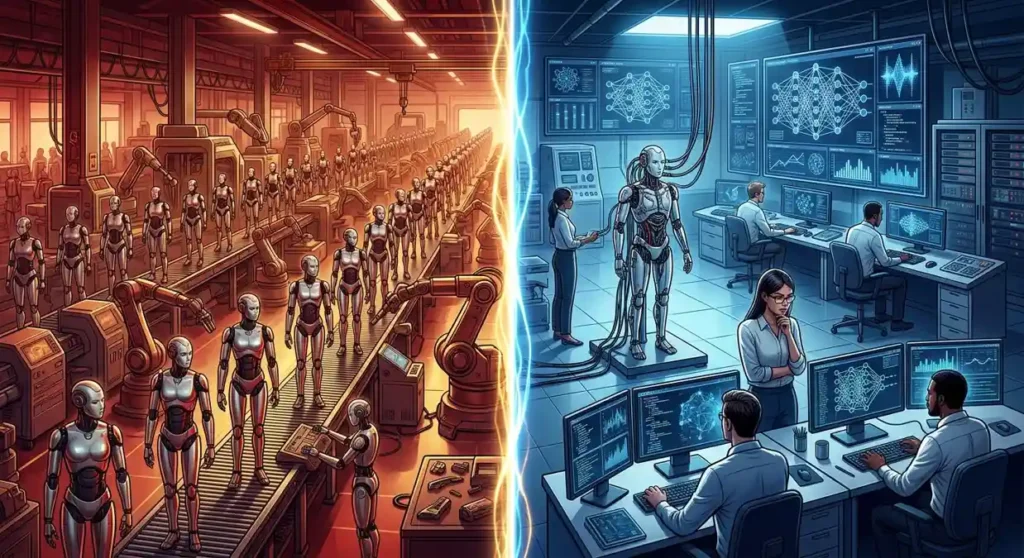
The split is cleaner than it sounds.
China is winning on volume and cost. Unitree’s G1 sells for $16,000 a robot that does backflips, climbs, and ships globally. XPENG’s IRON humanoid, unveiled at Auto Shanghai, packs 62 artificial muscles designed for genuine load-bearing strength, standing 1.78 meters tall with over 60 joints. The Leju Robotics and Dongfang Precision joint venture launched a high-capacity manufacturing facility in Guangdong this month the shift from boutique assembly to industrial scale is happening in real time. Xiaomi, following a successful pilot in its EV factory, completely redesigned its humanoid hand with a 1:1 human form factor and 150,000-cycle durability.
The United States is betting on AI depth. Tesla’s Grok integration gives Optimus a voice reasoning layer connected to the same AI system running in millions of Tesla vehicles globally. Figure AI’s surgical precision focus and Boston Dynamics’ DeepMind partnership represent advantages in autonomous reasoning that don’t show up in unit shipment numbers — but matter enormously for real-world reliability.
The role of advanced AI inference infrastructure, the technology that actually runs these AI models on robots at speed, is becoming one of the most important technical battlegrounds in this competition.
The honest truth: China deploys faster and cheaper today. Whether American AI sophistication creates a durable advantage by 2027 is genuinely uncertain.
Fresh Funding That Tells You Where This Is Going
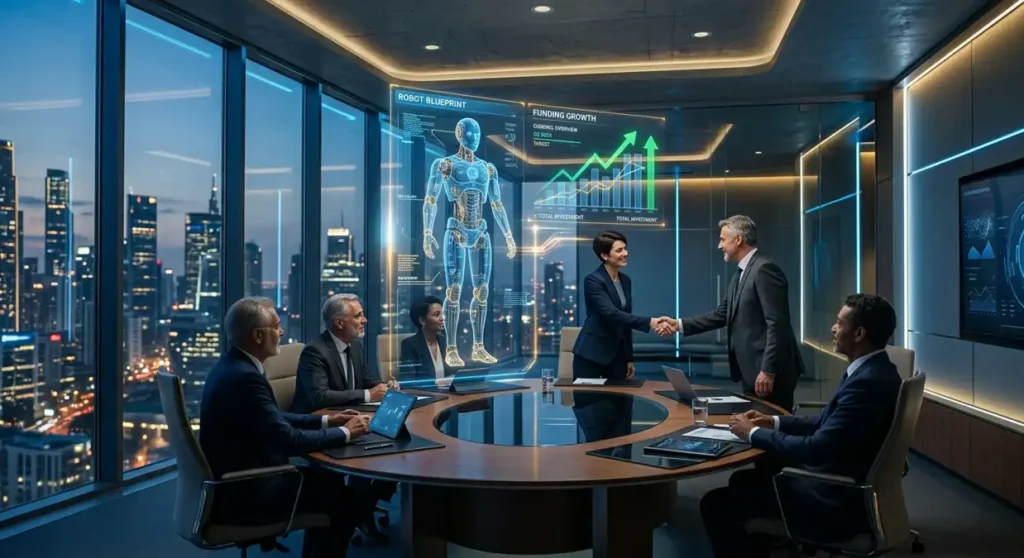
Money flows toward where serious people think the future lands. Here’s what the current funding picture looks like:
- Figure AI $2.1 billion total raised, Microsoft among the backers
- Neura Robotics €1 billion from Amazon and Qualcomm, €4 billion valuation
- Apptronik $938 million, Google and Qatar Investment Authority
- Galbot (China) $968 million in March for embodied AI research
- Tesla $20 billion CapEx commitment to Optimus a figure that dwarfs every VC round in the space combined
For context on why businesses are moving this aggressively, our breakdown of the best AI tools for business in 2026 explains how AI-driven automation is already reshaping company operations. Humanoid robots are the physical extension of that same shift.
The robot voice AI angle is also worth tracking separately. The natural language interfaces these robots use the way you’ll actually communicate with them — are being built on the same foundations as enterprise AI voice agents that businesses are already deploying today.
The Real Problems (That $1B Rounds Won’t Solve Overnight)
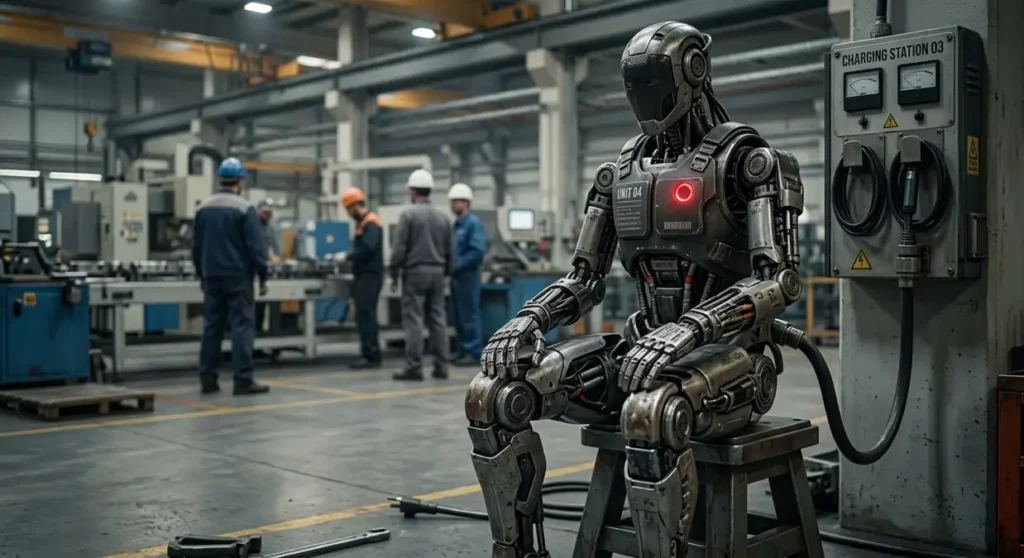
The investment wave is real. The challenges are also real, and anyone saying otherwise is selling something.
Battery life remains the most operationally painful constraint. Four to six hours per charge is the industry standard. Realbotix’s 10-hour runtime is exceptional precisely because it is rare. The gap between “impressive demo” and “24/7 factory shift” is a battery engineering problem as much as a software one.
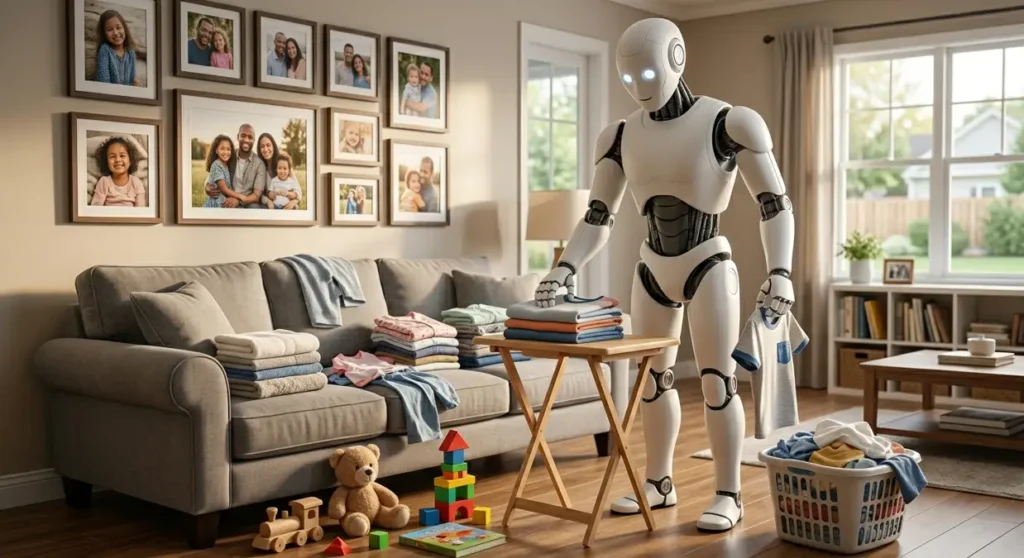
Unstructured environments break robots. Factories are controlled, predictable spaces. Living rooms are not. Teaching a robot to navigate a child’s toys scattered across different floor surfaces is exponentially harder than bolting car components in a fixed sequence. This is why home humanoids remain a 2028+ realistic deployment for most companies not price, but environmental complexity.
Safety regulation doesn’t exist yet. A 70-kilogram robot moving at speed near humans needs certification frameworks that no government has fully constructed. OSHA, EU Machinery Regulation, and equivalent bodies are racing to catch up with technology that’s already on factory floors. First-mover advantages come bundled with first-mover regulatory uncertainty.
The training data asymmetry. Companies with large existing workforces Tesla being the obvious example can collect training data from their own employees at scale. Pure-play robotics startups cannot. This creates a structural advantage that money alone doesn’t close.
China’s bubble warning. Chinese analysts have flagged that 180+ companies are now chasing the same humanoid opportunity with government subsidies driving the rush. Overinvestment, price wars, and forced consolidation are historical patterns that follow every hardware technology boom. The question is timing, not whether it happens.
What to Watch For the Rest of 2026
Five milestones that will tell you whether 2026 is the year humanoid robotics actually crosses the threshold:
1. Tesla Q2–Q3 Factory Results Are Gen 3 hands doing productive autonomous work at Fremont, or still primarily in data collection mode? This is the single most important data point in the entire industry this year. Watch Q2 earnings for the first honest numbers.
2. Tesla Gen 3 Full Body Reveal Coming this summer, likely at the Tesla Shareholder Meeting. The specs already confirmed (50 actuators, 22-DoF hands, Grok voice AI, FSD architecture) make this the most technically ambitious announced humanoid. Whether it lives up to them in a live demonstration is a different question.
3. AGIBOT’s International Move 10,000 units produced inside China is one milestone. Whether Chinese humanoid robots begin appearing in significant numbers across American and European commercial facilities is the geopolitical question underneath all the technology coverage.
4. Neura Robotics + Amazon Deployment What does it look like when a €4-billion-valued European humanoid gets integrated into Amazon’s global logistics infrastructure? That answer reshapes how the competitive map is read entirely.
5. First Real Home Deployments Realbotix units, 1X NEO orders, and similar consumer-targeted robots will generate real user feedback this summer and fall. How ordinary Americans actually respond to living alongside these machines, in terms of comfort, trust, and utility, is data that does not yet exist. It will by December.
Muhammad Hanif writes about robotics, AI infrastructure, and emerging technology for Smart Tech Ideas — with a focus on separating genuine signal from the noise that defines this space. Questions, corrections, or updates? Leave a comment below.
Related Reading on Smart Tech Ideas:
- Agentic AI News 2026: Latest Trends and Business Use Cases
- Top Innovative AI Inference Vendors to Watch in 2026
- Grok vs ChatGPT: Which AI Tool Wins in 2026?
- Best AI Tools for Business in 2026
- Technology Trends 2026: AI and Cybersecurity
The biggest mistake in humanoid robot coverage right now is assuming the future will arrive all at once. It won’t. What we’re seeing instead is a staggered rollout: factories first, logistics next, controlled enterprise environments after that, and homes much later than the marketing suggests.
The real story of 2026 is not that humanoid robots have fully arrived. It’s that the transition from prototype to deployment has clearly begun. That makes this year important, not because the race is over, but because it is finally real.
Frequently Asked Questions
How much does a humanoid robot cost in 2026?
Unitree’s G1 starts around $16,000 — the most accessible option currently available globally. Industrial-grade units from Apptronik and Boston Dynamics run $80,000–$250,000. Tesla is targeting $20,000–$30,000 for Optimus at scale, but external commercial availability isn’t expected until late 2026 at earliest, with mass consumer sales more likely 2027–2028.
Is Tesla Optimus available to buy right now?
No. As of April 2026, all deployed Optimus units are inside Tesla’s own factories for training and data collection. Gen 3 full reveal hasn’t happened yet. External commercial customers are the late 2026 target. Public consumer sales Musk has indicated would come by end of 2027.
Which country is leading in humanoid robotics US or China?
China leads in units shipped and manufacturing speed and cost. The US leads in AI software depth and reasoning capability. It is genuinely too early to call a winner — the answer depends on whether American AI advantages translate into reliable real-world performance over the next 18 months.
Are humanoid robots replacing jobs?
Not yet at scale, but the trajectory is clear for specific categories. Repetitive, structured, physically demanding work — assembly line tasks, warehouse sorting, parts handling — is the first wave. The displacement question is real. So is the growing demand for robot maintenance, oversight, and training roles that don’t currently exist in today’s job market. For a broader look at how technology is reshaping activity and work, see our piece on how technology has affected people’s lives in 2026.
What’s the most underreported humanoid robot story of 2026?
The gig economy training boom — thousands of people globally being paid to film themselves doing household chores so these robots can learn from human motion. The scale, the privacy implications, and the global economic dynamics are barely being covered outside specialized publications.
What’s the difference between humanoid robots and regular industrial robots?
Traditional industrial robots are fixed, single-purpose machines built for one environment. Humanoid robots have arms, legs, and balance systems modeled on human physiology — meaning they can work anywhere a human can, use existing tools, navigate stairs, and adapt to unstructured spaces. That flexibility is why factories are investing billions in them now.
