

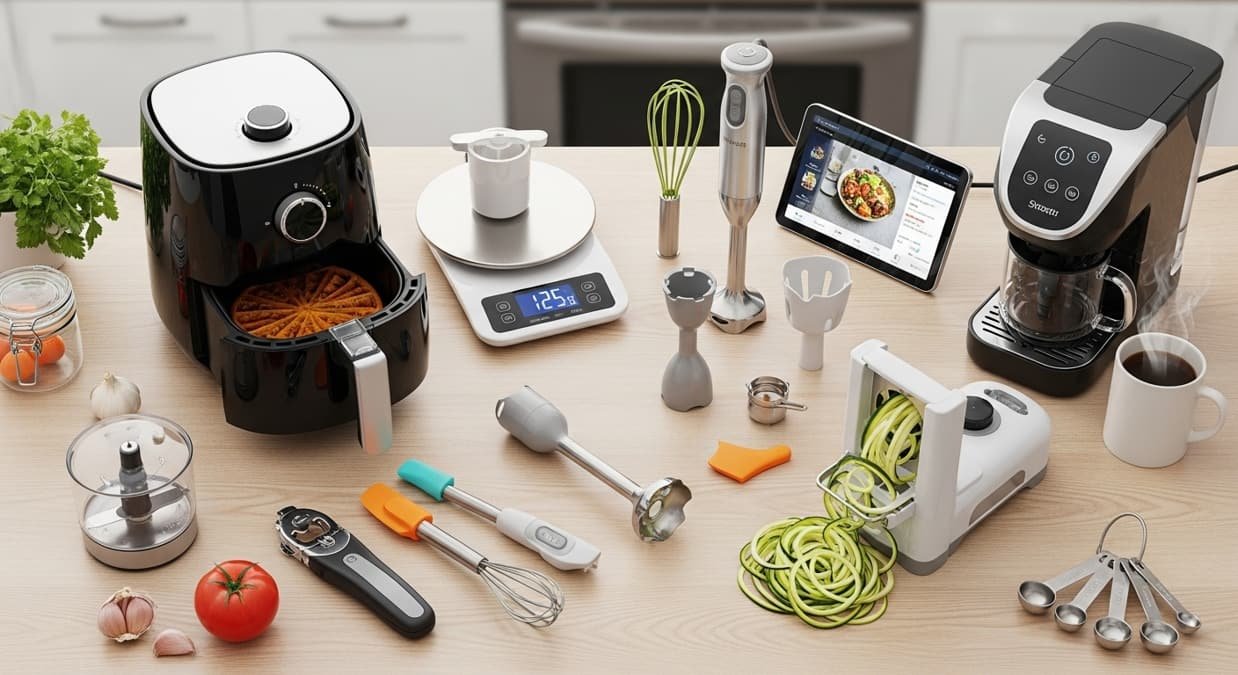
The best kitchen gadgets solve a task you repeat: an instant-read thermometer for checking food temperature, a digital scale for consistent measurements, a silicone spatula for mixing, a fine-mesh sieve for straining, a hand blender for soups, and storage containers for organizing leftovers. Start with your cooking habits and cupboard space. This is a category buying guide, not a hands-on ranking of particular models.
Best Kitchen Gadgets: A Quick Shortlist
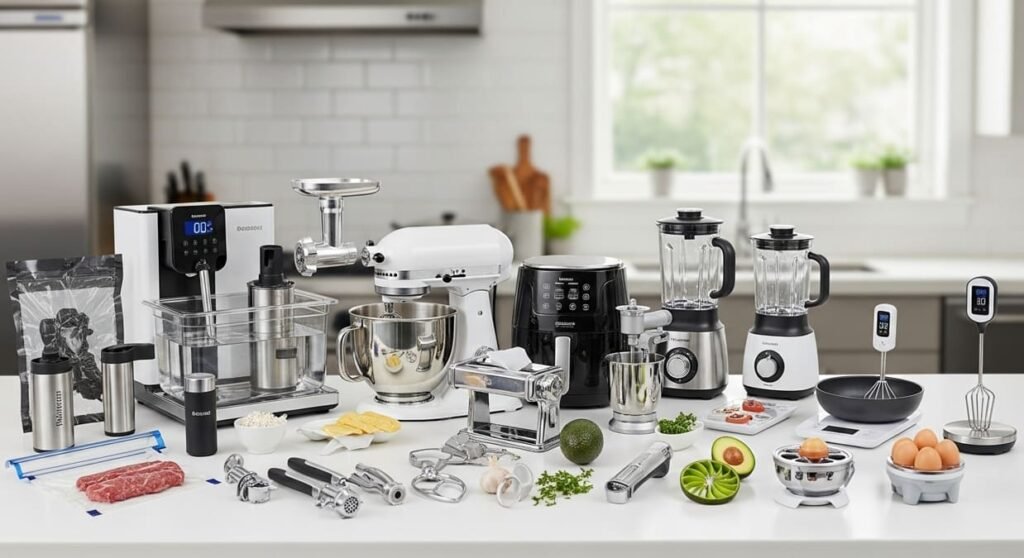
Quick shortlist: Cook meat regularly — consider a food thermometer. Bake or portion ingredients — consider a digital scale. Mix sauces or scrape bowls — use a silicone spatula. Strain sauces — use a fine-mesh sieve. Make blended soups — consider a hand blender. Store meals — choose suitable containers. A gadget you use weekly usually deserves more attention than a novelty used once. A simple way to prioritize is to keep a note for three normal cooking sessions. Record where you lose time: finding ingredients, measuring, chopping, blending or washing equipment. Then choose the category that addresses that repeated problem. If a task is only occasional, borrowing a tool or using a manual alternative may be better than buying. This keeps the guide practical for beginners as well as experienced home cooks.
Before buying, identify the slow or awkward step in one meal you often cook. Check whether a tool you already own can do the job. A whisk, a knife and a cutting board may be enough for occasional preparation. Avoid choosing by a “smart” label when a simpler tool is easier to clean and store.
Compare the grip, readable markings, storage size and cleaning instructions. For powered tools, also check voltage compatibility, warranty, replacement parts and how attachments lock into place. A low purchase price is less useful if parts cannot be cleaned safely or replaced.
Set a budget for the task, not for collecting gadgets. Prioritize safe measurement and everyday preparation before large appliances. There are no guaranteed fuel savings, health benefits or cooking results simply because a tool is new. Follow the appliance manual and the recipe’s method. For comparing two models in the same category, make a small scorecard: suitability for the task, grip comfort, ease of cleaning, storage footprint and cost of replacement parts. Treat advertising claims as questions to verify, rather than proof. Read the instructions before ordering if the manufacturer provides them. Measurements and compatibility matter more than a long feature list.
Measuring Tools: Thermometer and Digital Scale

1. Instant-read cooking thermometer: useful when checking meat, poultry, fish or reheated dishes. Insert the probe as the manufacturer directs and consult the food-specific temperature and rest-time guidance. USDA explains that appearance alone is not a reliable food-safety check. Clean the probe between uses.
A cooking thermometer does not replace proper storage, handwashing or separation of raw ingredients. Check its stated range, calibration guidance, probe design and cleaning limits. An instant-read model should not stay in the oven unless the manufacturer explicitly says it is designed for that use.
Source: USDA guide to food thermometers
2. Digital kitchen scale: useful for baking, repeatable recipes and portioning ingredients. Look for a tare function, units you understand, adequate capacity and a platform that fits your bowls. Put it on a stable surface and check the manual’s accuracy and care guidance. It is less necessary if you rarely use recipes that specify ingredient weights. For example, when a recipe specifies flour in grams, place an empty bowl on the scale, use tare to zero the display, add the required amount and zero it again before the next ingredient if the recipe allows that method. Do not confuse grams with milliliters: weight and volume are not interchangeable for every ingredient. If the display is difficult to read with a large bowl, that is a practical design limitation to consider before buying.
Preparation Tools: Spatula, Sieve and Hand Blender
3. Silicone spatula: useful for scraping bowls, folding batter and stirring suitable cookware. Check the manufacturer’s heat limit and whether the head is securely attached. A smooth design with fewer crevices can be easier to clean. Do not assume that every silicone utensil can touch a hot pan or heating element. A good spatula can also reduce waste by scraping batter or sauce from a bowl, but it should not be used as a knife or scraper for burnt deposits. For delicate cookware, use only utensils recommended by the cookware maker. Inspect utensils for loose heads, splits or damaged surfaces and replace parts according to the manufacturer’s guidance.
4. Fine-mesh sieve: useful for straining sauces, rinsing suitable ingredients and sifting dry ingredients. Match the mesh size and diameter to the job. Check that the handle and resting hook fit the bowls you use. Skip an oversized model if it will not fit your sink or storage space.
5. Hand blender: useful for blending soups or sauces in a suitable deep vessel. Check whether the manual permits hot-liquid use, keep the blade submerged as directed to reduce splashing, and disconnect power before handling or cleaning the attachment. A countertop blender may be preferable for your workload; neither is essential for occasional mixing. For a soup workflow, finish the cooking step, choose a vessel suitable for the blender and follow the manual’s hot-liquid precautions. Blend in manageable stages rather than lifting a running blade out of the liquid. Stop the motor before repositioning or inspecting the attachment. Detachable parts may have different washing rules from the motor housing. Check each part separately instead of putting the entire appliance in water or the dishwasher.
Food Storage and Small-Kitchen Organization
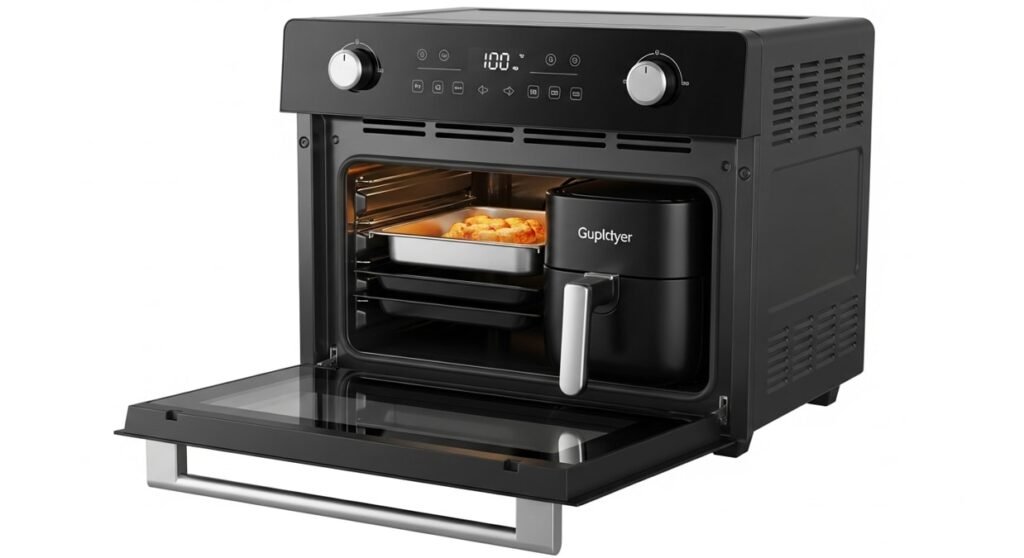
A manual tool can be the better choice for a small quantity. Before purchasing a powered gadget, compare total preparation time, including assembly and washing. If cleaning takes longer than the task it replaces, the extra appliance may be a poor fit for your kitchen. Large appliances are optional additions. An air fryer may suit small batches when its basket size matches your meals; a rice cooker may suit frequent rice preparation; and a food processor may suit repeated large chopping tasks. Compare them with your existing cooker and tools, including cleaning and counter space. They are not part of a universal must-buy set, and none should be operated outside its instructions.
6. Food storage containers: useful for organizing ingredients and portions you will actually use. Choose a size that fits your fridge and labels that make contents and dates easy to identify. Check the manufacturer’s freezer, dishwasher and microwave restrictions; a container suitable for one of these uses may not suit the others. When planning containers, think about the portions you actually store: a lunch serving, a family leftover or a small amount of chopped ingredients. A mixed set is useful only if the sizes get used. Check whether lids are interchangeable and whether seals come out for cleaning. Labeling food with its contents and storage date is a simple habit; it does not extend the safe storage period. Choose containers that fit existing shelves without blocking normal fridge organization.
Clear containers can help you see what is available, but they do not make food safe indefinitely. Follow food-specific storage guidance and keep raw ingredients separate from ready-to-eat food. Replace damaged containers or lids that no longer seal properly.
For a small kitchen, measure the drawer, cupboard or shelf before ordering. Stackable containers and multipurpose manual tools can reduce clutter. Avoid duplicate sets when a single useful item solves the problem. Match tools to the person using them, including grip comfort and readable controls, rather than gender-based marketing. Organization is easiest when the items used together stay together. Keep measuring tools near ingredients, preparation tools near the cutting board and containers near the packing area. Leave sharp attachments protected and powered equipment stored as directed. A useful layout can save searching time without purchasing anything. Before adding another gadget, reorganize the tools already in the drawer and see whether that solves the inconvenience.
Cleaning and Cooking Safety
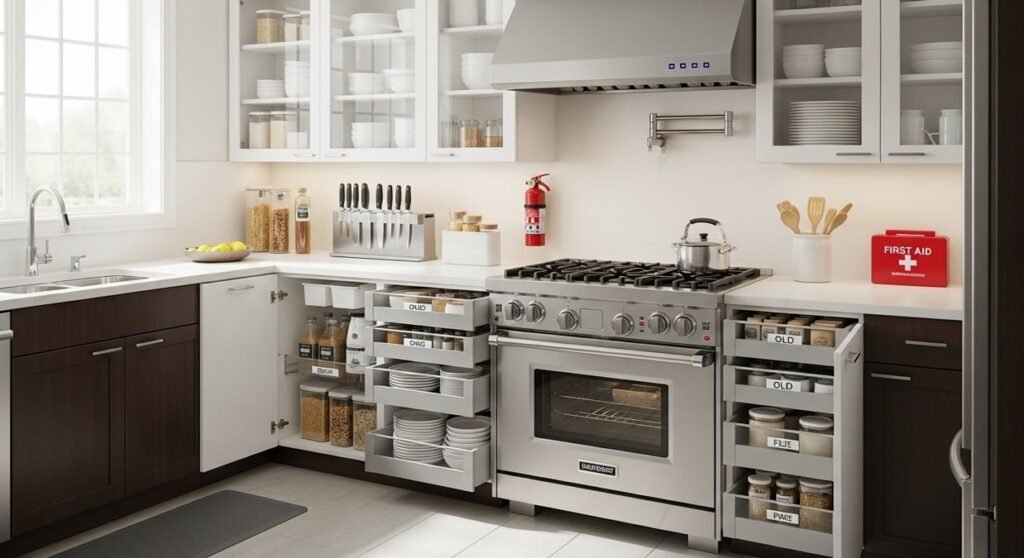
A practical gift should match the recipient’s cooking habits. Ask what they already own and whether they have room for another appliance. Do not assume a grill kit, blender or smart oven is universally useful. Check the return policy and local electrical compatibility for powered gifts.
Cleaning and safety are part of the purchase decision. Read instructions before use, keep blades and cords away from children, and unplug powered equipment before changing attachments when the manual requires it. Keep packaging and the model number so you can check manufacturer support or recall notices.
Automatic timers and app controls do not make cooking unattended safe. US Fire Administration guidance says to stay in the kitchen while frying, boiling, grilling or broiling. Induction cookware and surfaces can still become hot. Follow appliance instructions and keep an appropriate manual fallback if a connection or sensor fails.
Buying Checklist and Common Questions
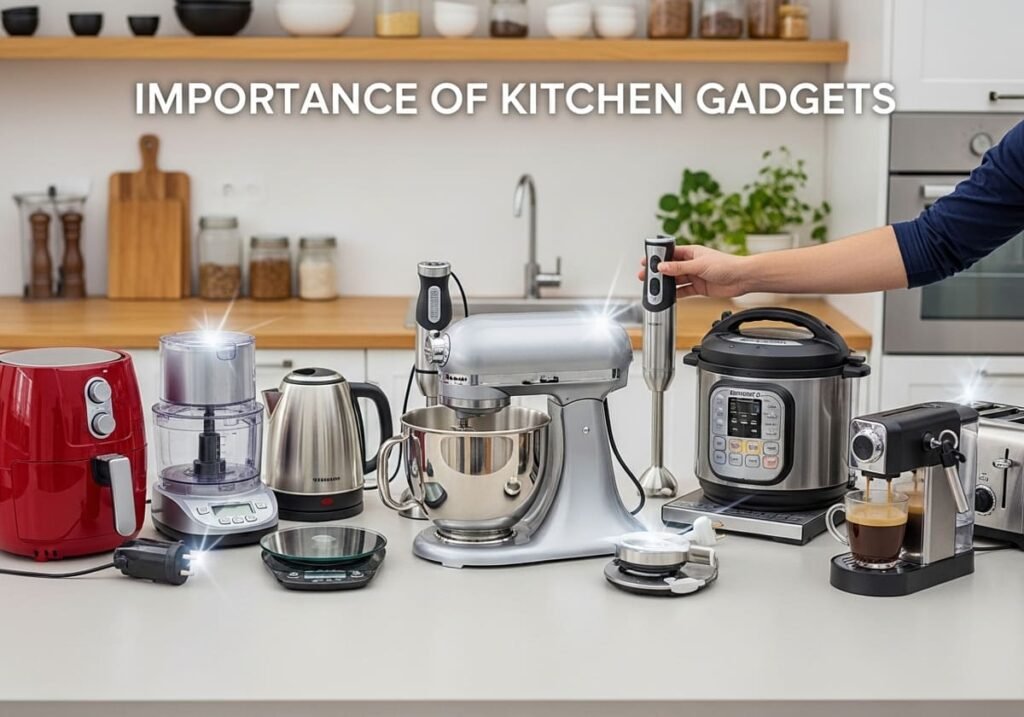
Buying checklist: Will I use it at least regularly? Does it fit my space? Can I clean every food-contact part? Are the instructions clear? Is the voltage compatible? Can I get replacement parts? Is there a reasonable return policy? Buy only after the tool passes the checks that matter for your kitchen. After a purchase, evaluate it during normal meals while the return window is still open. Check whether assembly, performance and washing match your expectations. Keep receipts, accessories and instructions together. If a gadget solves the task but introduces awkward cleaning or storage, reassess whether it deserves a permanent place. Build a small collection gradually instead of treating kitchen upgrades as an annual shopping requirement.
Which kitchen gadget should a beginner buy first? Choose the tool that addresses the task you repeat most. If you cook meat or poultry, a suitable thermometer helps check temperature. If you bake, a scale may be a higher priority than a large appliance.
Are smart kitchen gadgets worth the cost? Compare the feature you need with the simpler alternative. Remote controls or extra settings are useful only if they improve your actual workflow and remain usable when the app or internet connection is unavailable. For example, an app-controlled appliance may add convenience if you need a clear timer display, but check whether ordinary buttons still work without an account. Consider the long-term cost of accessories, filters or proprietary parts. A gadget with fewer features can still be the better choice if it meets the job, fits the space and remains straightforward to use and maintain.
Does a kitchen gadget guarantee healthier or safer food? No. Equipment can assist with measurement and preparation, but ingredient handling, cooking temperatures, cleaning and storage still matter. Avoid products marketed as a replacement for these steps.
What should I avoid buying? Skip single-purpose novelty tools you cannot store or clean easily, duplicated sets, and appliances whose instructions or compatibility you cannot verify. Start with one useful item and assess it during normal cooking before adding more.
